











A Practical Playbook for Accounting Firms Serving Gig-Economy Clients
More people than ever are earning extra income outside their 9-to-5 — selling products online, driving for rideshare services, freelancing, or monetizing content. What began as a temporary response to economic shifts during the pandemic has become a defining feature of today’s workforce.
Recent studies estimate that 30% to 40% of U.S. workers now earn some form of side-gig or self-employment income in addition to their primary job.
For accounting firms, that means a growing share of clients are mixed-income taxpayers, juggling both W-2 and 1099 income streams. Understanding how to manage these clients efficiently, keep them compliant, and guide them proactively through tax season has quickly become essential for modern firms.
Reality Check: Your Clients Probably Have Side Gigs
Mixed-income clients bring opportunity and complexity. They often come with income scattered across several platforms, inconsistent recordkeeping, and little awareness of quarterly tax obligations. Without a plan, these returns can easily eat up your bandwidth and lead to stressful, last-minute scrambles.
The good news? With the right systems in place, you can standardize your approach and make gig-client work just another smooth, profitable part of your workflow. This guide walks you through how to prepare, communicate, and collect information from these clients efficiently every single year.
Why Gig-Economy Clients Complicate Tax Season
When a client earns income from multiple sources, your engagement instantly becomes more complex. Gig-income returns tend to introduce more variables, more paperwork, and more opportunities for things to slip through the cracks.
Common pain points include:
- Missing documents: Clients may not receive every Form 1099-NEC or 1099-K they should. The IRS doesn’t require platforms to issue 1099s below certain thresholds, so it’s common for income to go unreported simply because “no form arrived.” Educating clients that all income is taxable, whether they receive a form or not can prevent issues later.
- Confusing platforms: Income can flow through multiple apps, payment processors, or marketplaces, each with its own reporting quirks.
- Untracked expenses: Few gig workers keep contemporaneous records for mileage, supplies, or home-office deductions—making accurate deductions difficult.
- Quarterly taxes: Many have never paid estimated taxes or understand how to calculate them.
The result? Extra back-and-forth, deadline pressure, and higher audit risk. You can minimize those risks—and protect your team’s time—by building a structured intake process and client education plan that standardizes how you handle gig-income cases from day one.
The Compliance Map (for Your Firm and Staff)
Here’s what your preparers should monitor when serving gig-economy clients:
- Core forms: Schedule C, Schedule SE, Form 1040-ES, and when issued, Forms 1099-NEC or 1099-K.
- Estimated taxes: Generally due in April, June, September, and January. Clients earning self-employment income should make quarterly payments using Form 1040-ES.
- Recordkeeping: Deductible categories often include mileage, supplies, software, advertising, cell-phone use, and home office expenses.
- Audit triggers: Commingled accounts, missing 1099s, unsubstantiated deductions, or mismatched platform income reports.
- Update Each Year: Check the current IRS guidance for the Form 1099-K reporting threshold, standard mileage rate, and self-employment tax rules. Also verify any state-level changes, as some states have different thresholds or require additional forms.
A Repeatable SOP for Gig-Client Engagements
- Identify Gig Clients Early
Include clear questions in your organizer or onboarding form to flag clients earning side-gig income:
- Did you earn income from ride-share, delivery, freelancing, online sales, or content creation?
- Which platforms did you use (Uber, DoorDash, Upwork, Etsy, Patreon, eBay, etc.)?
- Did you receive any 1099 forms or platform summaries?
Tag or segment these clients in your CRM so you can tailor communications and workflows for them throughout the year.
- Educate and Set Expectations
Send a short “Gig-Income Overview” email that explains:
- What qualifies as taxable self-employment income.
- Which records clients should maintain.
- When estimated taxes are due.
- How they should share their documentation with your firm.
Proactive communication at this stage reduces confusion and saves hours of cleanup later.
- Collect Documents Consistently
Use a standardized checklist for every gig-income client, including:
- 1099-NEC and 1099-K forms (if any).
- Platform transaction summaries or CSV exports.
- Expense logs or bookkeeping files.
- Proof of estimated tax payments.
- Home-office and vehicle-use details.
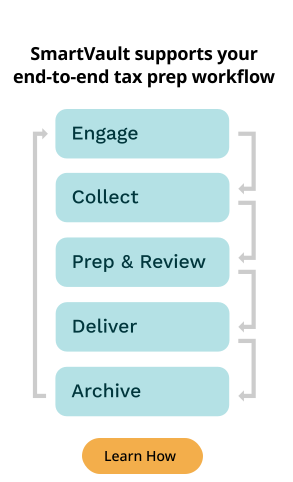
Instead of chasing attachments via email, create and send document requests directly from SmartVault with due dates, reminders, and upload links clients can access from any device. Clients can securely upload receipts, statements, and spreadsheets from anywhere, while your team tracks completion in real time.
You can automate much of this intake process with SmartRequestAI, auto-generating tailored document requests based on client type or prior-year return data. Combined with SmartVault’s secure storage and tracking, this creates a streamlined, end-to-end workflow for source document collection.
- Review and Triage Gaps
Hold brief, 15-minute calls with clients who have incomplete records or complex income streams. Verify each income source, confirm major deductions, and note anything that needs follow-up before busy season peaks. Document these discussions in your workpapers to strengthen audit readiness and maintain consistency across preparers.
- Standardize Preparation
Create a repeatable process for preparing and reviewing gig-income returns. Use a consistent workpaper template, tie platform summaries to total income, and reconcile key deductions. Organize supporting documentation in SmartVault, your document management system, to keep everything centralized, secure, and easy to review. This standardized approach protects margins, improves accuracy, and ensures quality control as your gig-client volume grows.
- Deliver Advisory Value
Once the return is complete, schedule a short follow-up to discuss:
- Estimated-tax planning for the year ahead.
- Retirement plan options for self-employed taxpayers (SEP, Solo 401(k), etc.).
- Bookkeeping or entity-structure services.
Position your firm as a proactive advisor — not just a compliance vendor — by turning gig-client engagements into long-term advisory relationships.
SmartVault: Your Workflow Hub for Gig-Client Management
SmartVault helps firms serving self-employed and gig-economy clients work faster, stay organized, and protect data. With SmartVault’s integrated document management and client portal, you can:
- Create reusable “Gig Income” document request lists and batch-send them to tagged clients.
- Let clients securely upload receipts and statements from any device.
- Track completion status on a central dashboard.
- Send reminders for missing documents.
- Maintain a clear audit trail with timestamped uploads and comments.
SmartVault gives you visibility, accountability, and a stress-free client experience.
Ready to Streamline Gig-Client Tax Prep?
You’ll be seeing more side-gig and platform-income clients every season. With the right systems in place, they can become some of your most profitable relationships instead of your most chaotic.
See how SmartVault standardizes gig-client intake and document management. Schedule a demo today.